About
A magazine for the ride you do most
Bike2Work Day is an independent English-language magazine about commuting by bicycle, the most repeated ride in your life, and the most underrated. This page explains who publishes it and by what rules.
The mission, plainly
Sunday cycling has a whole media industry: races, group rides, carbon fibre, weight weenies. The Monday commute has comparatively little, despite being the ride most people actually do: five days a week, fifty weeks a year, in whatever weather the sky ships. This magazine exists for that rider. We publish four practical pillars, gear, routes, health, weather, wrapped in a culture section that treats the morning bike lane as the civic institution it has become. Everything is written from miles ridden, in English for an international readership, because the 8 a.m. commute looks remarkably similar in Portland, Preston and Porto.
Editorial standards
Four rules govern every page. No affiliate links. We sell nothing, earn no commission, and name products only as examples: the gear guide recommends categories and budgets, never stores. Independence over access. No press trips, no loaner agreements that cost a verdict, no "partner content", the day a page here reads like a brochure, write to the contact page and quote this paragraph at us. Corrections in public. Mistakes are fixed with a note, not silently; the corrections log lives with the contact page. Small on purpose. No tracking pixels, no engagement optimisation, no infinite scroll (a magazine), not a slot machine. The Commuter Brief runs on the same rules: once a week, one click to leave.
How the magazine works
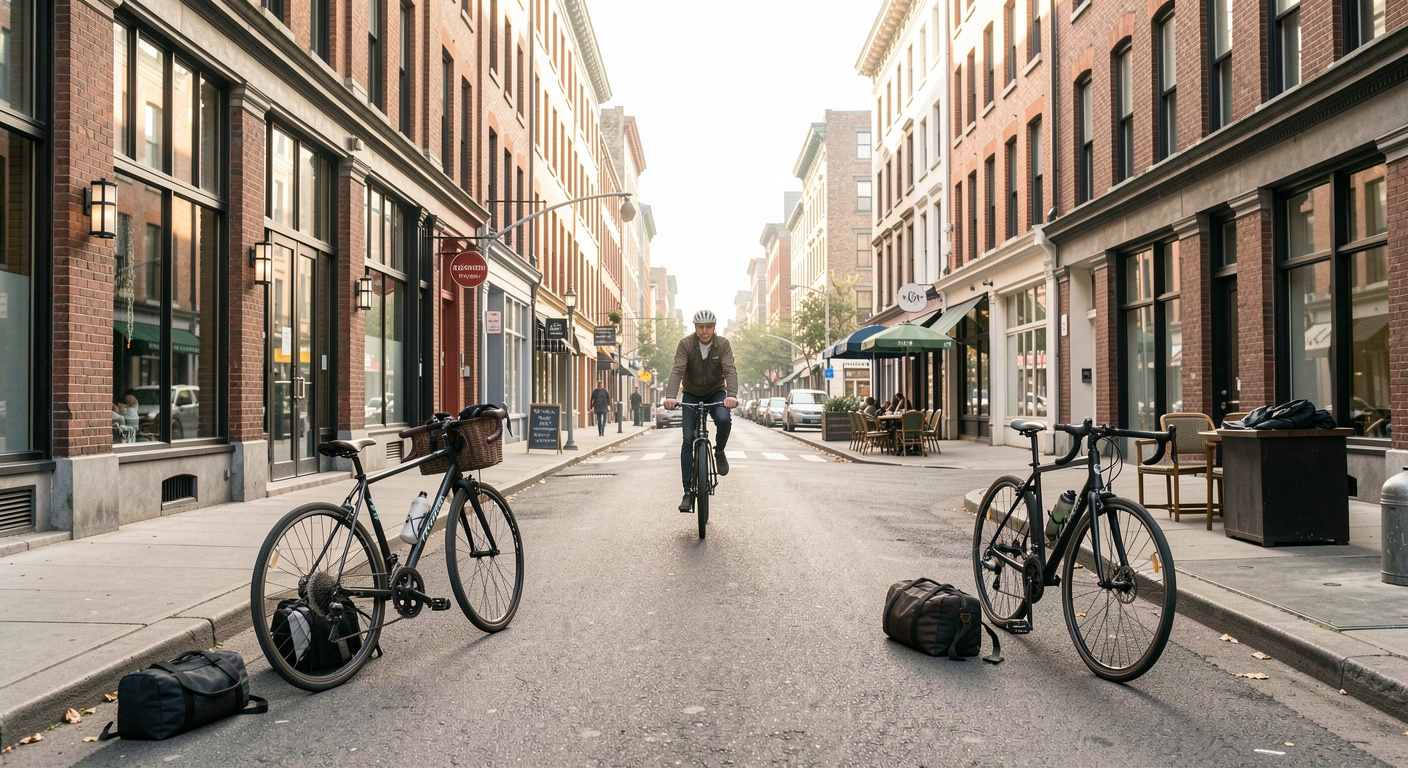
Bike2Work Day is a small independent editorial operation: a working editor, contributing riders, and a deliberately unhurried schedule, the library grows by seasons, not days, and pages are revised when the truth changes rather than when the calendar does. The challenges, the Commute Challenge and the Summer Challenge (are open formats: no app), no entry fee, run them yourself with the rules as published. Employers get a dedicated playbook on the programs page, because workplaces are where commuting culture scales. Photography returns to the magazine gradually via a central pipeline; until then the pages are drawn in the site's house palette (asphalt, concrete and hi-vis) which suits the subject anyway.
What we are not

Not a race site, a folding-bike fandom, a league table of cities, or a channel for outrage about drivers, the culture pages cover conflict where it is structural, without pretending every commute is a battle. Not a government campaign or a charity; the independence is the point and the policy. And not exhaustive, deliberately. The resources page is a short list because curation is the service.
Questions, pitches, corrections and reader routes go to the contact page; everything else starts on the front page. If you have read this far, you are exactly the reader this magazine is for: someone who takes the ordinary ride seriously. See you in the lane.
The magazine covers what riders meet off the bike as well as on it: a customer notice for the premises, for anyone with a front door and customers, and Medication Guide and DailyMed practice, for anyone holding a prescription.