Culture
River fishing on foot: reading water, gear, and what to
River fishing on foot rewards a small number of repeatable habits: read the water before you cast, carry gear you can walk in for hours, and know who to call when something in the river looks wrong. The rest, fly choice and casting stroke, sits on top of those three. This article covers each in turn, with the numbers and the practical details a walker or wader can use on the next trip.
What does reading the water actually mean?
Reading water is the habit of predicting where a fish will hold before you cover it. On small streams the useful features are few and they repeat. A gravel bar splits flow and creates a seam, the visible line where fast water meets slow. Fish sit on the slow side of that line, facing upstream, and the current brings food to them. A current seam against a bank or a boulder works the same way.
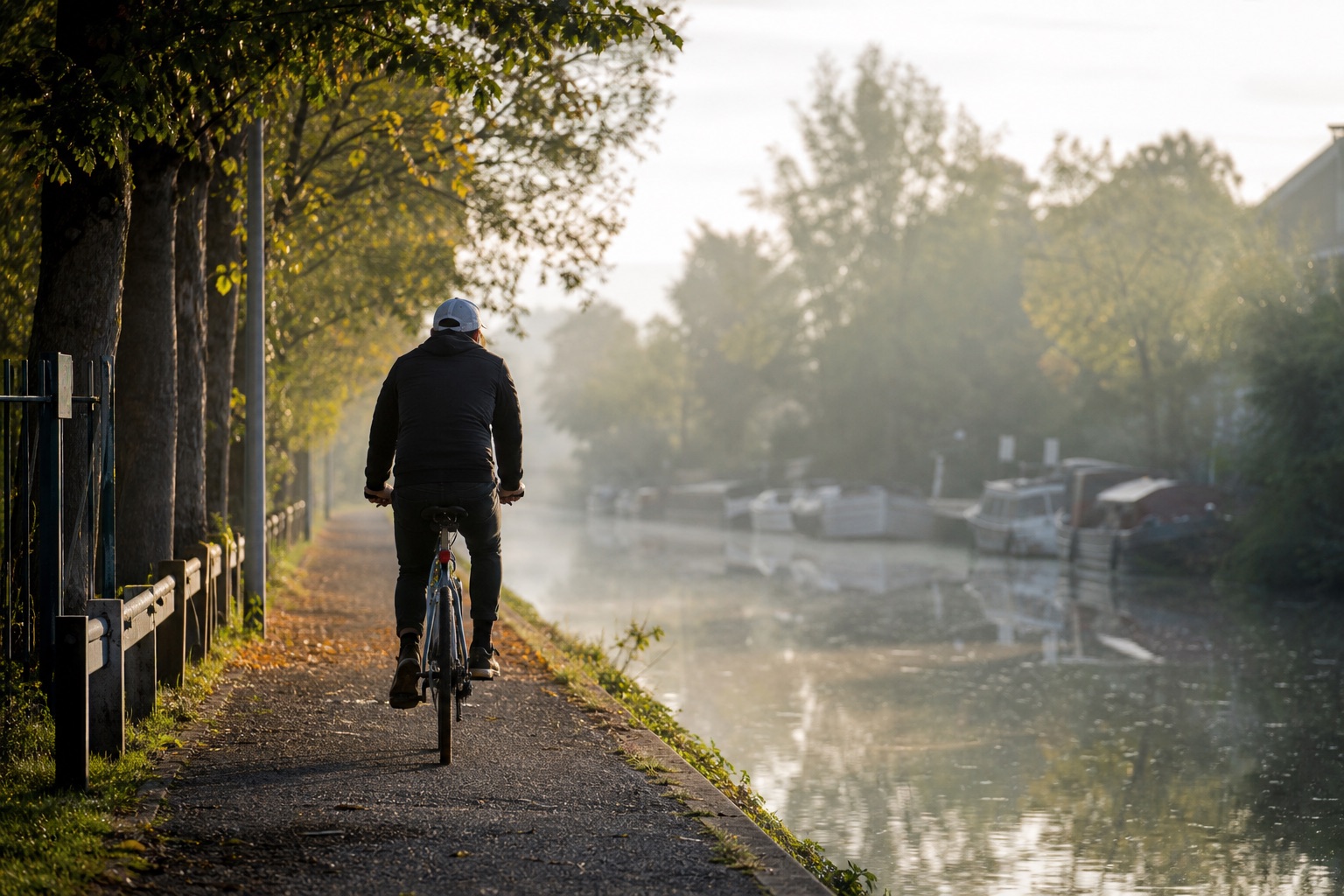
After rain, the gauge matters more than the map. A river at base flow and the same river two feet higher are different fisheries. High water pushes fish to the edges, into soft pockets behind rocks and under undercut banks where the current is broken. A weighted nymph fished close, almost under your feet, often outperforms a long cast into the middle. Low, clear water reverses this: fish move to deeper riffles and shade, and your approach matters more than your fly.
A mayfly dun on the surface and a fish rising to it is the most visible event in river fishing, and the easiest to misread. A single rise does not mean a hatch. Watch for a minute: if fish are taking duns in a rhythm, match the size and colour of what is on the water. If the rises are splashy and irregular, the fish are probably taking emergers just under the film. Observers who walk these streams without a rod, and anglers who keep notes, tend to see the same water differently over a season. A field journal such as Mountain State Anglers treats that observation as the point, not a by-product.
Which gear earns its place on a small stream?
Gear on a small stream is a weight problem. Every item you carry is carried for hours, so the list stays short. Rubber-soled wading boots with ankle support are the default on Appalachian streams: felt grips wet rock better in some conditions, but rubber travels better between streams and does less to move invasive species. Ankle support matters on boulder fields where a rolled ankle ends the day.
A four-weight rod with a cork handle and a moderate blank covers most of what a small river asks. It casts a dry fly softly enough not to spook fish in shallow water and still throws a weighted nymph when you need one. A wading staff is not a luxury on slick bedrock or during high water. It gives you a third contact point and lets you cross places you would otherwise walk around.
Everything else is optional. A small box of nymphs, a few dries, tippet, nippers, and a net you can carry on your back. If you are walking in from a trailhead, a light pack beats a vest. The test for any item is simple: did you use it last trip? If not, it stays home.
How do you fish a high, coloured river?
High water after rain is the most common reason a trip gets cancelled, and often the wrong call. Once the river starts to drop and clear, the fishing can be better than at base flow, because fish are pushed to the edges and less cautious. The window is usually the first day or two after the peak, when the gauge is falling and the colour is tea rather than chocolate.
Fish the margins. Walk the bank and look for soft water: the inside of bends, the pocket behind a boulder, the strip along an undercut bank. Cast short. A weighted nymph dropped a rod length from your feet, with a small indicator or a tight line, reaches fish that a long cast would spook. Cover water slowly and step carefully; in high water the bank itself is often undercut.
Safety sets the limits. A rising river is not a fishing river. If the gauge is still climbing, or if you cannot see your boots in knee-deep water, walk away and come back tomorrow. A wading staff and a belt on your waders are cheap insurance. Cross where you can see the bottom, and cross downstream of where you plan to fish, not above it.
What should you report, and to whom?
Anglers and walkers see the river more often than any agency can, which makes them useful observers. A fish kill, a spill, or a stretch of dead water is worth reporting the same day. The practical method is a photo journal: date, location, what you saw, and a few images from the same spot. Photos with a landmark in frame are more useful than close-ups alone.
In the United States, the first call is usually the state wildlife agency's fish kill or pollution hotline. Many states run a single number for fish and wildlife violations and kills, and the dispatcher routes it. If the water looks polluted rather than dead, the state environmental agency handles spills. A river mile marker, a bridge name, or GPS coordinates turns a vague report into an actionable one.
On the bank, the same instinct applies. A riparian buffer of trees and shrubs shades the water, filters runoff, and holds the bank together. A sediment barrier at a construction site keeps soil out of the channel. Canopy cover keeps summer water cooler, which matters more to trout than most anglers assume. Reporting a problem and leaving a bank better than you found it are the same habit in two forms.
How does a commuter fit river fishing into a week?
River fishing on foot does not require a full day. A two-hour window after work covers a short stretch if you pick water close to home and skip the drive to the famous river. The commute itself can be part of it: a rod in the car or a pack by the door turns a detour into a session.
The limiting factor is usually light, not time. Fish the last hour before dark in summer, when water cools and insects move. In winter, the middle of the day is warmer and the fish are more likely to feed. Keep a small kit packed and ready, and the decision to go takes seconds rather than twenty minutes.
Notes matter more than gear over a season. A few lines on the gauge, the weather, and what worked build a record you can actually use. The same discipline applies to what you see on the water, whether that is a hatch, a kill, or a bank sliding into the channel. The anglers who get the most out of a small river are usually the ones who pay attention on the days they do not catch much.
The short version
Read the seam before you cast. Carry a four-weight, rubber soles, and a staff. Fish the edges in high water and stay out of a rising river. Report kills and spills the same day with photos and a location. Keep a small kit ready so a two-hour window is enough. None of this is complicated, and all of it improves with repetition.
Source: fws.gov.
Source: epa.gov.
The lure side of the same water is covered in the field guide to surf plugs, which follows how a piece of wood swims.
Source: usgs.gov.